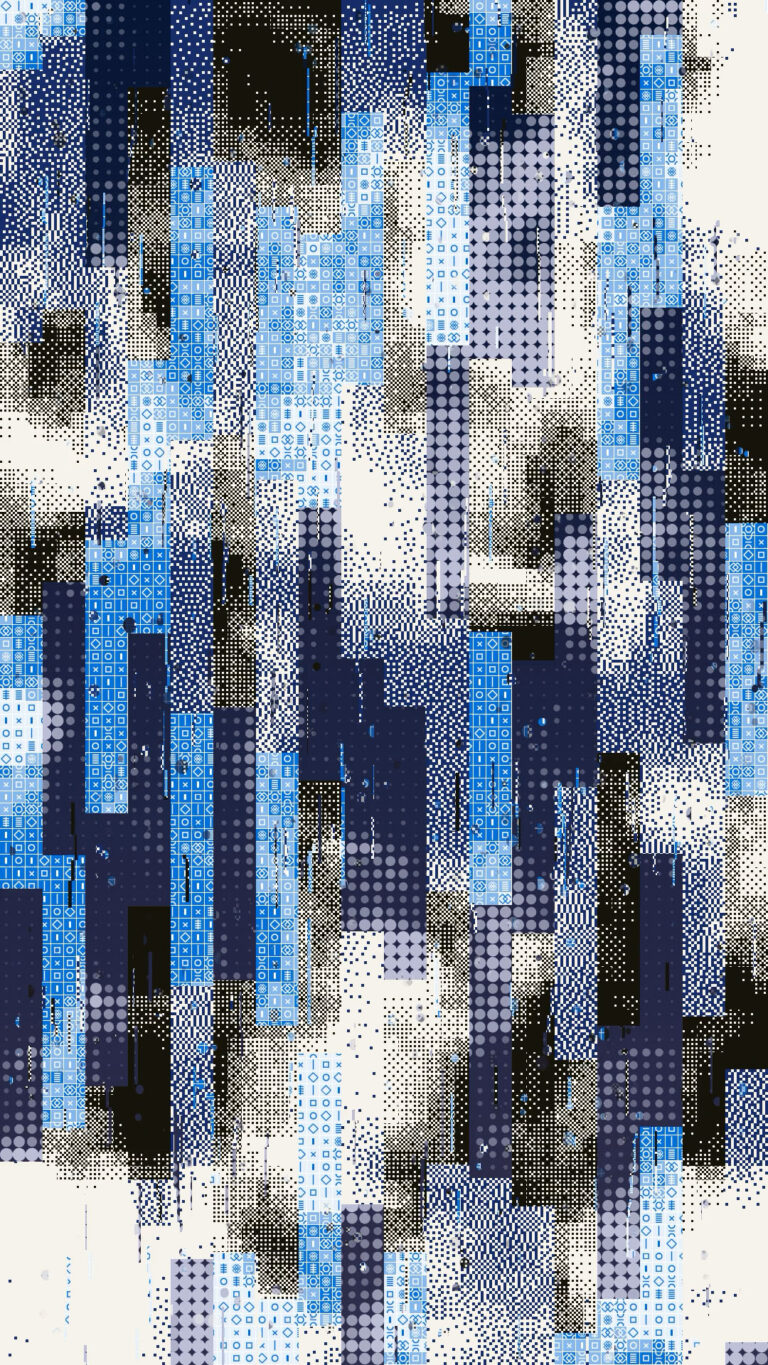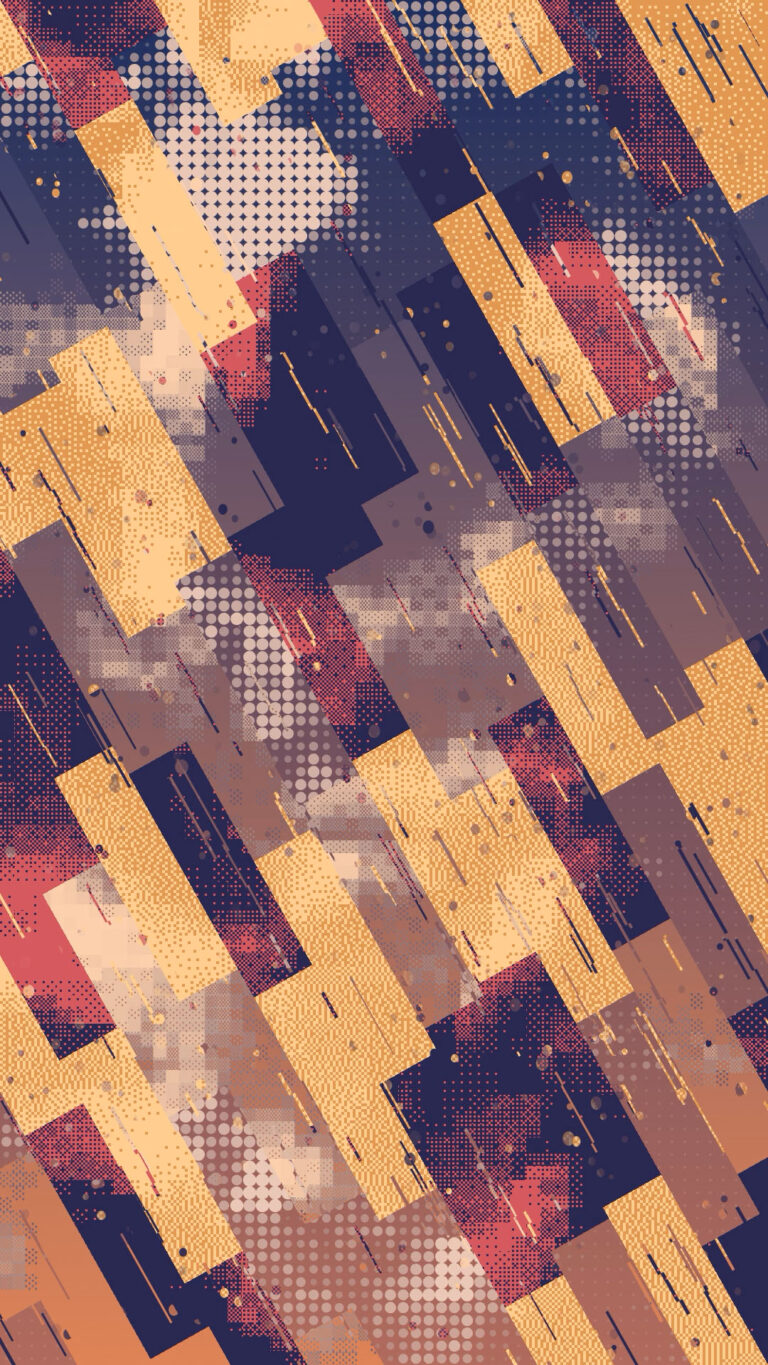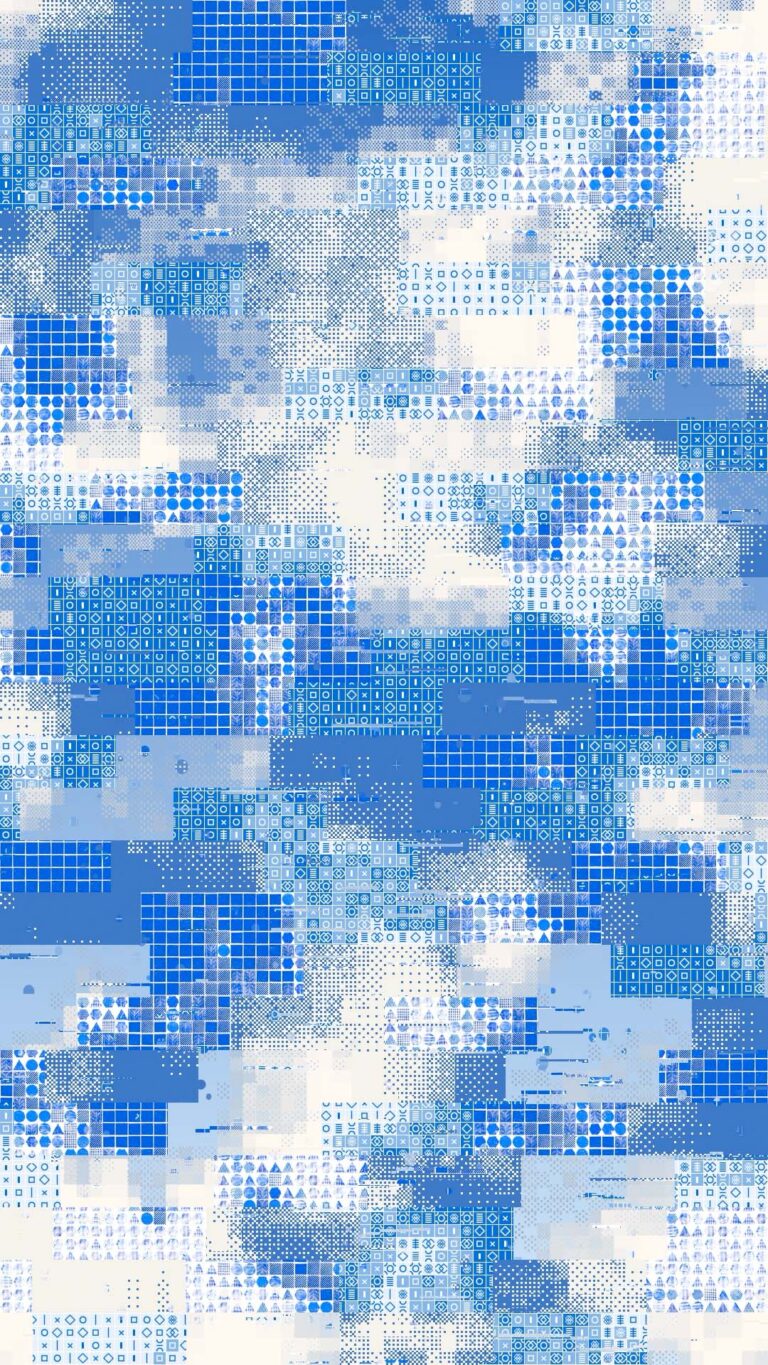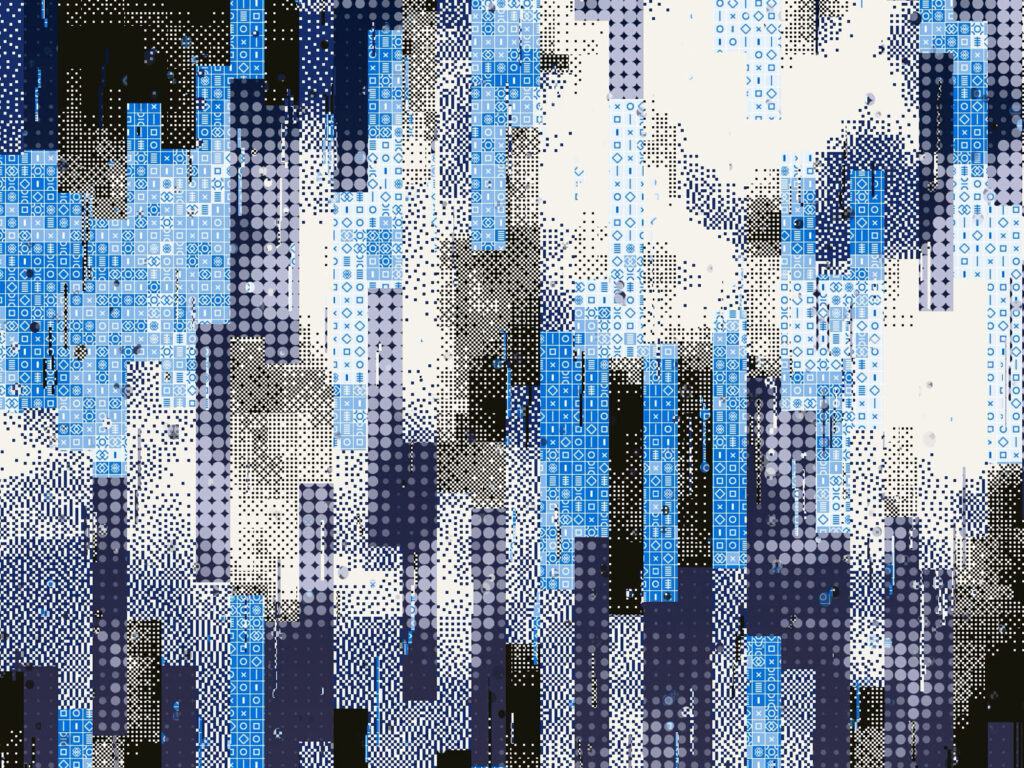
At the end of October 2026, rain started falling through my cloud animations. What began as a test has become a new three-part mini series, Asynchronous Airdrops. In each work, two versions of the same sky lie on top of each other, and only the rain reveals the second. The title joins two kinds of drops: the rain in the animations and the airdrop in crypto.
Rain as a Collaborator
Rain took on a new meaning for me in August 2020, during the RURart summer residency in Cookshire-Eaton, Quebec. I was stamping outside when it suddenly started to rain. At first, I was upset because the rain blurred the distinct lines of my stamp marks. However, I came to realize that rain is a way to co-create with my medium, the clouds. Some pieces followed in which I collaborated with the rain. For Engagement Draws Traceability, I exposed 16 rubber-stamped sheets of paper to rain in increasing five-minute intervals and turned them into an animation. Since then, rain has appeared in some of my artworks, and Asynchronous Airdrops builds on that.
How the Animations Work
Back in 2020, I also began translating clouds with Python through tile sets of painted marks, stamp marks, and drawn shapes. Over time, this grew into a collection of tile-based visualization modes, which I mostly share on social media. In some, I used currency bills, ASCII characters, halftone dots, dither, and hatching, each a different vocabulary for the same sky. Until recently, I typically used one mode at a time for each export.
In Asynchronous Airdrops, several modes share the frame. Interestingly, the same seed draws the same clouds in the same place in every mode. Switching modes changes the palette and the marks, never the sky itself. Each work layers two compositions of that sky. In the first, bands of colour decide which mode shows where. The second is visible only through the rain. Every drop and every streak works as a mask, and wherever one falls, the second sky shows through the first. Between a few hundred and nearly a thousand drops are on screen at a time.
What Is a Crypto Airdrop?
The word airdrop comes from aviation, where supplies are dropped from an aircraft to the people below. In crypto, an airdrop distributes free tokens or other digital assets to many wallets. Projects use airdrops to reward early users or to draw attention to something new. Recipients usually qualify through a snapshot, a record of which addresses held a certain asset or used a certain service at a set moment.
One of the earliest airdrops on record took place in Iceland. From March 25, 2014, every Icelander who entered their resident ID on the project’s website could claim 31.8 Auroracoin. This method distributed half of the coin’s supply (CoinDesk; Investing.com). Six years later, the decentralized exchange Uniswap gave 400 UNI tokens to every address that had used it. Within four days, about 141,000 addresses had claimed theirs (The Block).
On Bitcoin, inscriptions made it possible to airdrop artworks rather than coins. Bitcoin Ordinals write an image or a text onto an individual satoshi, Bitcoin’s smallest unit. In crypto art, an airdrop is also a gesture between artists and collectors. A free edition sent to the holders of an earlier work can be a thank-you or the first piece of a new project. Because every drop is recorded on the chain, it also documents the relationship between the artist and the collector.
However, not every airdrop is welcome. Increasingly, spam tokens and advertisement NFTs land unasked in wallets, some of them even malicious. Like rain, an airdrop arrives whether you asked for it or not.
How an Airdrop Actually Arrives
I have also been thinking about the parallels to rain: how the drops arrive offset, and how the block time can offset their arrival. A blockchain collects transactions into blocks, and a transfer only arrives once it is written into one. On Bitcoin, a new block is created on average every ten minutes. These intervals are random. Roughly one block in ten follows within a minute, and a few times a week the network waits more than an hour.
A small airdrop can go out as a single transaction. Bitcoin lets one transaction pay many addresses at once, so every recipient receives the drop in the same block. A large airdrop rarely fits. Bitcoin nodes only pass on standard transactions of up to 400,000 weight units, roughly a tenth of a block. A large distribution must be split into many transactions, and each waits for space in a block. Those paying lower fees wait longer.
An airdrop that lands entirely in a single block does not necessarily appear everywhere at once. Wallets and marketplaces have different thresholds for when they show a new token. Some list a transfer while it is still pending. Others will wait until it is written into a block and confirmed once, or until several more blocks have confirmed the transaction. On Bitcoin, six confirmations, about an hour, is a common rule of thumb before a transfer counts as final. As a result, some collectors may see the drop within minutes, while others, looking at a different wallet or marketplace, see it only an hour later.
On Ethereum, many airdrops are not sent at all. They are made claimable, and each recipient claims in a transaction of their own, whenever they choose. The Uniswap airdrop worked this way, so its arrivals spread over days and weeks. In a nutshell, an airdrop often arrives offset, block by block, and appears offset, wallet by wallet.
Sent Together, Received Apart
In this sense, crypto airdrops are similar to raindrops. Raindrops sometimes fall at the same time, yet they often reach the ground offset. Larger drops fall faster than smaller ones, and the wind carries some farther. Rain also falls inevitably on everyone below, invited or not. In the title, the word asynchronous represents these events that happen without a shared clock.
Next year marks a decade since clouds became my symbol for Bitcoin and blockchain technology. They are constantly transforming, intangible, and a symbol of hope. For me, they also embody an often neglected fragility. Bitcoin would cease to exist if people stopped maintaining it.
First Three Artworks
The series grew out of individual visualization modes developed over the past few years and several studies from the past few months. Three of these first studies became Asynchronous Airdrops – One, – Two, and – Three, showing the airdrops at night, sunset, and daytime. In the three works, the bands run vertically, then diagonally, and finally horizontally, as you often see them from a passenger’s seat on a plane.