Publications
Printed and online publications, academic papers, and educational installations on blockchain-related and crypto art.
Overview
Research on Crypto Art
In recent years, the narrative around crypto art has shifted dramatically, increasingly shaped by commercial platforms, venture-backed projects, and newcomers with little connection to the movement’s origins. Much of the historical record has been rewritten to suit short-term market cycles, sidelining the artist-led experiments and Cypherpunk-rooted values that defined the space long before the NFT boom of 2021.
Through peer-reviewed papers, book chapters, magazine articles, and educational installations, I aim to contribute to an independent narrative that centers artistic integrity, the movement’s continuum of incremental innovation, and the core principles of self-sovereignty and inclusivity. Documenting what actually happened, by whom, and why, has become a personal passion of mine and the throughline of my PhD research at the University of Zurich.
My work has appeared in the academic and cultural press, including Leonardo Journal (MIT Press), Espace Art Actuel, the Crypto Art. Begins book (Rizzoli New York) and RightClickSave.

Martin Lukas Ostachowski
PhD Researcher & Crypto Art Historian
University of Zurich

Peer-Reviewed Research
Academic Papers & Journal Articles

Understanding the History of Blockchain Art as Incremental Innovation
in: Espace Art Actuel · Montréal, QC · Blockchain (139): pp. 20–33
Abstract
In this essay, I synthesize five years of my research into the development of crypto art. By organizing key innovating forces in successive chapters, this essay promotes the idea of a staircase model to provide a better understanding of its incremental evolution. Additionally, it highlights how rapid capital influx led to explosive growth, and left the nascent space vulnerable to the following market slowdowns, which challenged many of the movement’s initial ideals and aspirations.
ID Érudit: 107000acView on Espace Art Actuel View on ÉruditRelated blog post
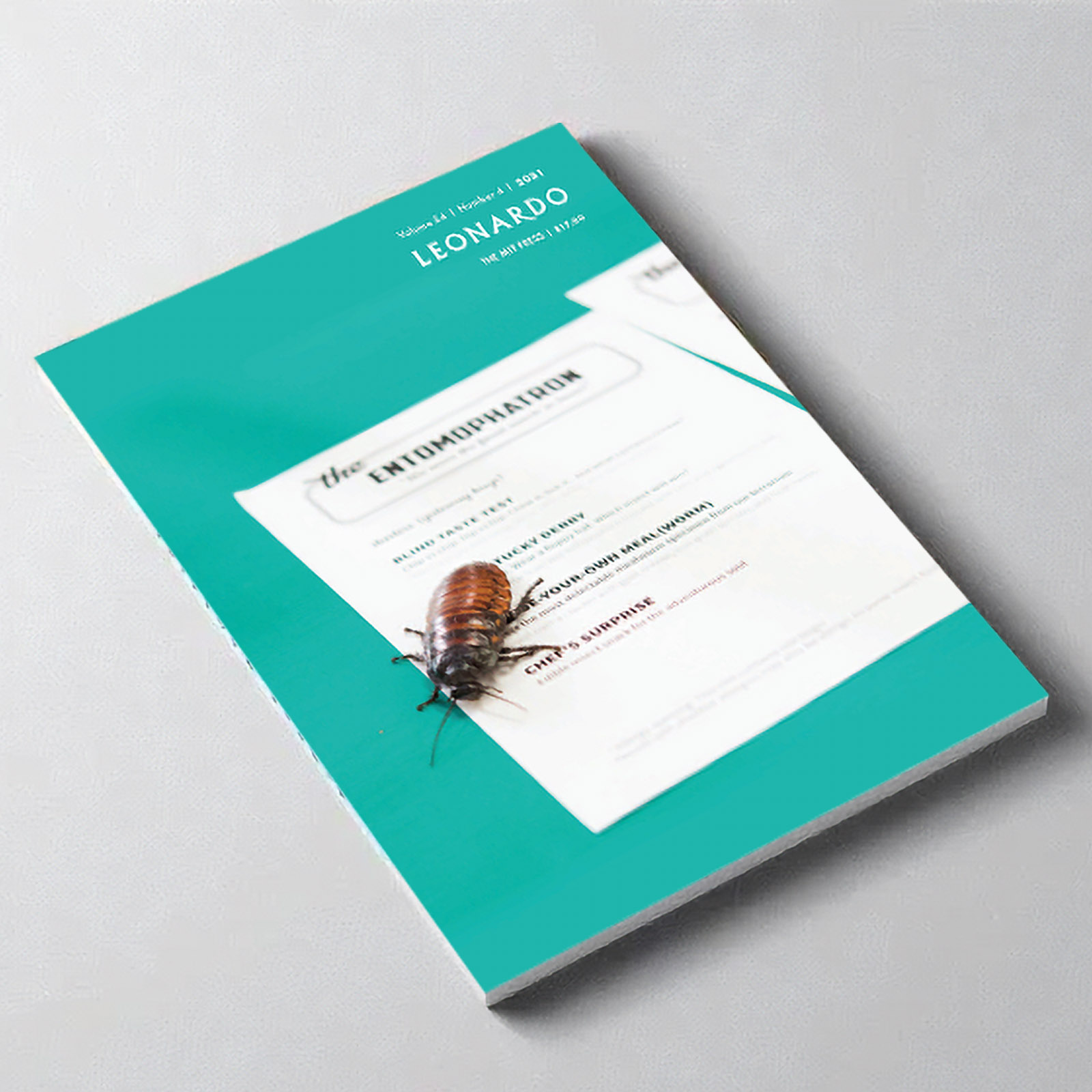
Crypto Art: A Decentralized View
in: Leonardo, MIT Press · Oakland, CA · 54 (4): pp. 402–405
Abstract
Crypto art is limited-edition digital art, cryptographically registered with a token on a blockchain. Tokens represent a transparent, auditable origin and provenance for a piece of digital art. Blockchain technology allows tokens to be held and securely traded without the involvement of third parties. Crypto art draws its origins from conceptual art—sharing the immaterial and distributive nature of artworks, the tight blending of artworks with currency and the rejection of conventional art markets and institutions. The authors propose a collection of viewpoints on crypto art from different actors within the system: artists, collectors, gallerists, art historians and data scientists. A set of emerging themes and open challenges surfaces.
DOI: 10.1162/leon_a_01998 View on MIT Press View on arXiv Related blog post
Originally published as preprint: arXiv:1906.03263 (June 9, 2019)
Books & Editorial
Book Chapters & Magazine Articles
History of Crypto Art
in: Crypto Art. Begins Rizzoli New York, NY · pp. 48–53
Abstract
This essay outlines the evolution of crypto art as a decentralized, values-driven movement rooted in the Cypherpunks. It traces the development from early blockchain experiments and conceptual tokenized artworks to the rise of NFTs and artist-led platforms. Rather than highlighting isolated “firsts,” the text presents crypto art as a continuum of innovation shaped by technological shifts and cultural dynamics. Some key milestones include memetic projects such as Rare Pepes, the emergence of smart contract platforms on Ethereum, and related standards such as ERC-721. The essay proposes a working definition of crypto art, distinguishing it from general NFT activity by its conceptual connection to blockchain. It also explores activist practices and meme culture as central themes. The essay concludes with a critique of recent trends and underscores the need to preserve crypto art’s founding principles of self-sovereignty and inclusivity amid growing institutional interest.
ISBN: 978-88-918369-6-0 View on Rizzoli USA

A Brief History of Rare Pepe: How a Viral Meme Went from Outcast to Art Museum
in: Right Click Save, Magazine · January 14, 2023
Abstract
This article traces the evolution of “Rare Pepes,” digital trading cards featuring the meme character Pepe the Frog, created by Matt Furie in 2005. Initially a comic character, Pepe became an internet meme and later, in 2016, the centrepiece of a blockchain-based art project. An anonymous user named “Mike” tokenized Pepe images on the Counterparty protocol, which led Joe Looney to create the Rare Pepe Wallet (RPW). RPW allowed users to collect and trade these digital cards, fostering a community-driven art movement. Despite controversies surrounding Pepe’s appropriation by extremist groups, efforts by Furie and others aimed to reclaim the character’s original intent. The Rare Pepe project played a significant role in the early development of crypto art. Recent highlights culminate in high-profile sales, such as the “HOMERPEPE” card, and institutional exhibitions, such as “DYOR” at Kunsthalle Zürich. The movement’s legacy continues through initiatives like “Fake Rares,” highlighting its enduring impact on digital art and NFT culture.
Installations
Educational Installations
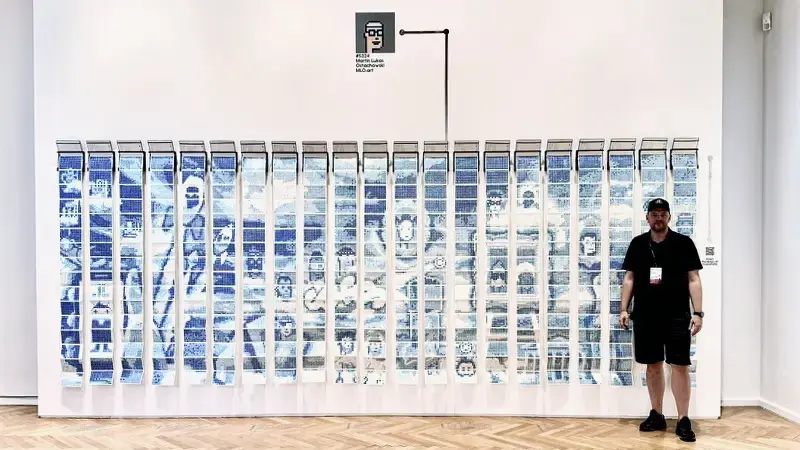
POW-3: A Brief CryptoPunks History in 45,360 Marks
in: Museum Francisco Carolinum, Linz, Austria · Art of Punk · Sep 4, 2024 to Jan 26, 2025
Abstract
A 6-meter (20 ft) wide installation visualizing the short but turbulent history of the influential CryptoPunks project in seven chapters, using rubber stamps and suspended notebooks.
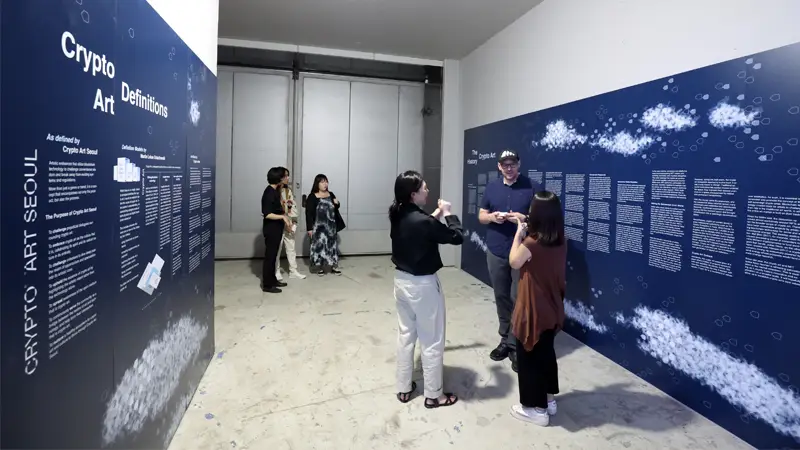
The Crypto Art History and Definitions of Crypto Art
in: L’Espace Etnah Godeok, Seoul, South Korea · Crypto Art Seoul · Sep 5–7, 2023
Abstract
Two informational displays for Crypto Art Seoul: a 2.4-meter (8 ft) wide wall defining crypto art and a 4.8-meter (16 ft) wide wall detailing its history.
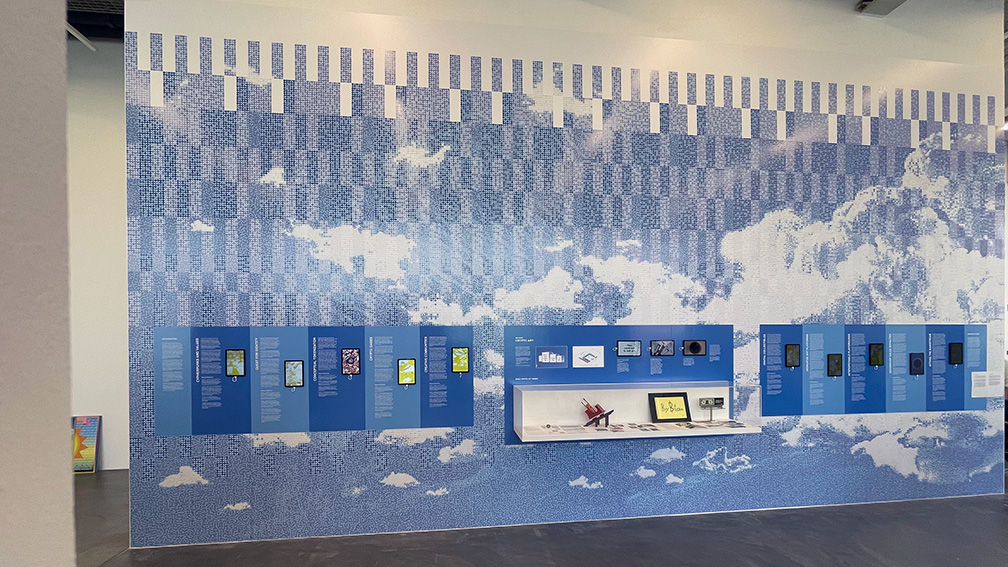
Cumulonimbus Murus: An Introduction to Crypto Art
in: Kunsthalle Zurich, Switzerland · DYOR: Do Your Own Research · Oct 8, 2022 to Jan 15, 2023
Abstract
Spanning 9 meters (30 ft), the largest installation to date. Twelve chapters across thirteen monitors, with a display of influential physical bitcoins, bills, and bitcoin-related art.
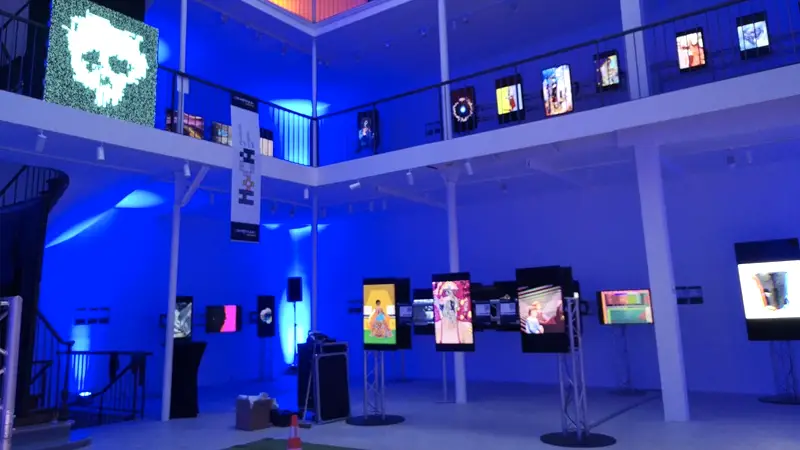
History of Crypto Art
in: Joseph Gallery, Paris, France · Crypto Art Revolution · Dec 15–16, 2021
Abstract
For the Museum of CryptoArt (LeMoCA)’s third anniversary, a three-meter (10-foot) illustrated history of crypto art.
Related Research
What is Crypto Art?
A framework for blockchain-related art, crypto art, and art NFTs.
ReadHistory of Crypto Art
The comprehensive timeline of hundreds of milestones in blockchain-based art, spanning 1993 to today.
ReadSpeaking Engagements
Keynotes and lectures on crypto art history at institutions and conferences.
Read