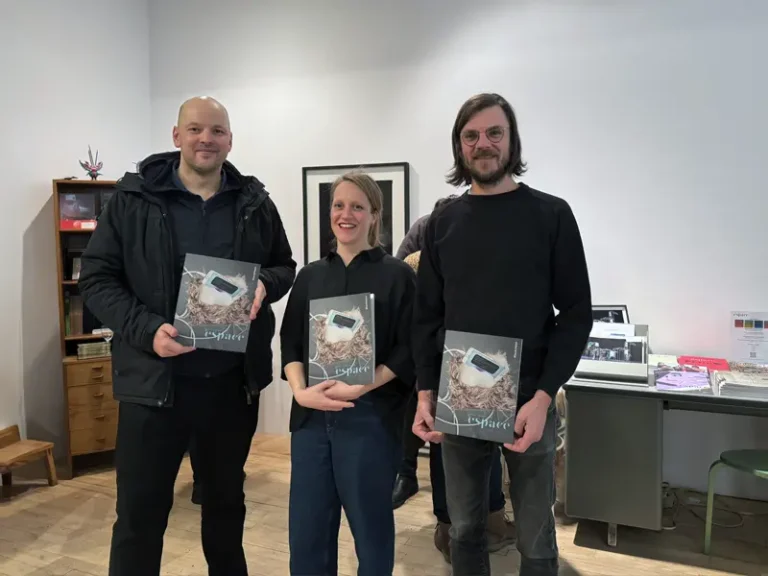
I was pleased to take part in a roundtable organized by ESPACE art actuel on the theme of its most recent issue, Blockchain: After the Protocols. The discussion, titled Collecting Blockchain and NFT Works, was held in collaboration with the Art et Musée research team and the CIECO reflection group as part of the New Uses of Art Museum Collections partnership. Moderated by Gina Cortopassi, the conversation brought together Nathalie Casemajor, Christine Blais, Jean-Michel Ross, and myself to exchange on how decentralized technologies are reshaping artistic practice, collection, and engagement.


While the discussion was not recorded, I’ve outlined below some of my responses and reflections on the main questions raised during the session.
How did You Discover Blockchain Art and NFTs?
I was initially drawn to cryptocurrencies, particularly the underlying blockchain technology, because it represented a shift in how we think about, store, and interact with data. As both a painter and technologist, I was curious to explore its artistic potential and began experimenting almost exactly eight years ago, in the spring of 2018, creating digital works within what was then called crypto art.
As a struggling artist disillusioned by the slow and linear structures of the traditional art world, I immediately recognized the paradigm shift blockchain offered for digital art, a medium that had always been paradoxically forced into physical formats to limit distribution.
In 2019, I co-authored one of the first position papers on crypto art and soon after began documenting the intersection of blockchain and art, work that continues to this day.
What are the Specific Features of Collecting Blockchain and NFT Works?
Collecting blockchain and NFT-based artworks requires a certain level of technical understanding, from creating wallets and acquiring cryptocurrencies to assuming the new responsibilities that come with digital ownership. This initiation often reveals that the movement is not only artistic but also philosophical, political, and monetary, challenging long-established systems taught in schools and universities. Many early artists were therefore drawn to blockchain activism.
Since the $69M sale in 2021, however, the narrative has shifted. NFTs began to be treated primarily as digital containers for art and assets, and a distinction emerged between “crypto artists” and “NFT artists.” Early practitioners, often deeply rooted in crypto culture and ideology, sought to preserve the movement’s foundational values, while newcomers approached NFTs as a medium rather than a mindset. This division continues to shape the discourse and collection practices today.
My current work focuses on two areas. The first expands the definition models I’ve been developing around the value systems of crypto artists, which I now explore through interviews. I realized that I had previously focused too heavily on technical distinctions, particularly the misuse of the term “NFT.” The underlying values of crypto artists influence not only interpretation but also collection choices. For instance, I don’t collect works on blockchains that compromise decentralization, such as commercial, centralized ones like Solana.
My second focus lies in permanence and conservation. The market slowdown of recent years exposed the fragility of many platforms, leading to disappearing works. One of the major misconceptions about NFTs is their permanence, in reality, data storage varies widely. The rise of the “on-chain” movement addresses this issue by ensuring that media files and code are fully stored on the blockchain itself, preserving the work’s integrity over time.
Who Collects This Kind of Artworks?
To date, there has been surprisingly little institutional interest in NFTs in Canada. Abroad, however, museums, galleries, and fairs are ahead of the curve in recognizing, collecting, and exhibiting these works. Since 2015, several new-media-focused institutions in Europe, and more recently in the United States, have actively acquired blockchain-based art. Opportunities such as today’s discussion are therefore especially valuable in helping bridge that gap.
The collecting patterns for blockchain art often mirror those of the traditional art world, where tech entrepreneurs diversify their portfolios by acquiring cultural assets. The financial structure of the space has led to familiar terminology, such as blue-chip artists, being adopted from traditional markets.
Yet, crypto art also gave rise to a new kind of collector: the digital native. This group, raised in online environments and familiar with digital economies, finds meaning and community in collecting digital value. Many never felt at ease in conventional white-cube galleries, but the open, memetic culture of crypto art offered a space where they finally belonged.
Since the NFT market plunged after COVID, what are the current trends in NFT collecting?
The market continues to contract, much like the broader economy and the traditional art market. Current collecting trends tend to gravitate toward two extremes: on one end, accessible, low-cost, and community-driven projects still attract engagement; on the other, interest persists in established or “branded” artists whose work has demonstrated long-term stability and value. Many collectors are using this prolonged slowdown to expand their holdings and acquire sought-after works at more sustainable prices.
A second notable shift is the renewed attention to Bitcoin-based art. Historically, Bitcoin wasn’t a primary medium for NFTs beyond early experiments on sidechains such as Namecoin or Counterparty, but the rise of Ordinals and other innovations has brought new creative and collecting energy to that ecosystem.
Finally, we see an increased focus on larger-scale crypto art projects and “phygital” works, art that merges physical and digital elements. These hybrid creations appeal to collectors looking for more tangible expressions of blockchain art while maintaining the innovation that defines the medium.